


HyperOS 4: November 2026 Rollout Schedule, Eligible Xiaomi, Redmi, and Poco Devices
Check the official HyperOS 4: November 2026 Rollout Schedule based on Android 17. See the full list of eligible Xiaomi, Redmi, and Poco phones, top features, and update tips.
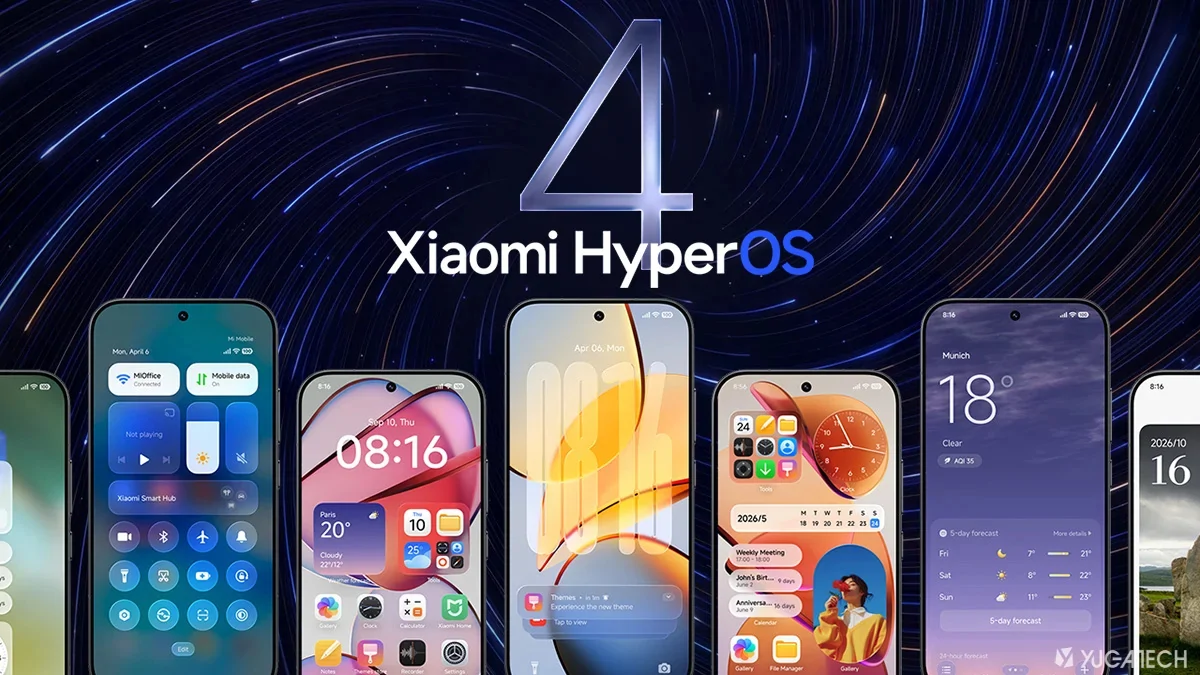
Xiaomi has officially kicked off the global stable release of its Android 17-based operating system, confirming the HyperOS 4: November 2026 Rollout Schedule for more than 80 smartphones and tablets. Following beta testing that began in August and September, the stable Over-The-Air (OTA) distribution started on November 3, 2026, and will reach 82 devices across Xiaomi, Redmi, and Poco lineups in three phases through December 2026.
For smartphone users, students, and everyday buyers in Bangladesh—where Redmi Note and Poco mid-range phones dominate the market—this update delivers a major visual overhaul alongside deeper cross-device tools without requiring a hardware upgrade. While the newest Xiaomi 18 series ships with the software out of the box, older flagships and budget handsets dating back to the Xiaomi 13 series are queued up for the upgrade.
HyperOS 4: November 2026 Rollout Schedule (Wave 1 & Wave 2)
Xiaomi has split the HyperOS 4: November 2026 Rollout Schedule into two distinct monthly batches—Early November and Mid-November—before moving to older generations in December. Because OTA updates travel in regional batches, devices in South Asia typically receive the notification within a few days to a couple of weeks of their listed wave.
| Rollout Phase | Brand / Category | Eligible Models |
|---|---|---|
| Phase 1: Early November 2026 | Xiaomi Phones | Xiaomi 17 Ultra, Leica Leitzphone powered by Xiaomi, Xiaomi 17, Xiaomi 17T Pro, Xiaomi 17T, Xiaomi 15 Ultra, Xiaomi 15 |
| Phase 1: Early November 2026 | Redmi Phones | Redmi Note 17 Pro Max 5G, Redmi Note 17 Pro 5G, Redmi Note 17 5G, Redmi Note 17, Redmi Note 15 Pro+ 5G, Redmi Note 15 Pro 5G, Redmi Note 15 Pro, Redmi Note 15 5G, Redmi Note 15, Redmi 17 5G, Redmi 17, Redmi 17C 5G, Redmi 15C 5G, Redmi 15C |
| Phase 1: Early November 2026 | Poco Phones | Poco F8 Ultra, Poco F8 Pro, Poco X8 Pro Max, Poco X8 Pro, Poco X8 Pro Iron Man Edition, Poco X8, Poco M8 Pro, Poco M8, Poco C95 Pro, Poco C85 |
| Phase 1: Early November 2026 | Tablets | Xiaomi Pad 8 Pro, Xiaomi Pad 8 |
| Phase 2: Mid-November 2026 | Xiaomi & Poco Phones | Xiaomi 15T Pro, Xiaomi 15T, Poco F9 Ultra, Poco F9 Pro, Poco F7 Ultra, Poco F7 Pro, Poco F7, Poco X7 Pro, Poco X7 Pro Iron Man Edition |
| Phase 2: Mid-November 2026 | Tablets | Xiaomi Pad 7 Pro, Xiaomi Pad 7, Xiaomi Pad Mini, Poco Pad X1, Poco Pad M1, Redmi Pad 2 Pro 5G, Redmi Pad 2 Pro |
Phase 1: Early November 2026 Batch Details
The opening wave covers 31 smartphones and two flagship tablets, led by the Xiaomi 17 series and Xiaomi 15 series. Notably, Xiaomi prioritized affordable handsets in this first batch alongside its premium devices, meaning owners of the Redmi Note 17 series, Redmi Note 15 family, and entry-level models like the Redmi 15C and Poco C85 are receiving early access.
Global users on the Poco F8 Pro and European units of the Poco F8 Ultra have already begun spotting the stable firmware notification.
Phase 2: Mid-November 2026 Batch Details
An additional 16 devices—nine smartphones and seven tablets—are scheduled to get the update starting in mid-November. Interestingly, the newer Poco F9 Pro and Poco F9 Ultra are placed in this second wave, slightly behind their F8-series predecessors. Tablet users studying or working on the Xiaomi Pad 7 series, Xiaomi Pad Mini, and Redmi Pad 2 Pro will also receive their updates during this mid-month window.
December 2026 Rollout Plan for Older Devices (Wave 3)
Xiaomi is extending software support to 33 additional devices in December 2026, bringing the update to older flagships and popular mid-rangers:
- Xiaomi Smartphones: Xiaomi MIX Flip, Xiaomi 14 Ultra, Xiaomi 14, Xiaomi 14T Pro, Xiaomi 14T, Xiaomi 13 Ultra, Xiaomi 13 Pro, Xiaomi 13, Xiaomi 13T Pro, and Xiaomi 13T.
- Redmi Smartphones: Redmi Note 14 Pro+ 5G, Redmi Note 14 Pro 5G, Redmi Note 14 Pro, Redmi Note 14 5G, Redmi Note 14, Redmi Note 14S, Redmi 15 5G, Redmi 15, and Redmi A7 Pro.
- Poco Smartphones: Poco F6 Pro, Poco F6, Poco X8s, Poco X7, Poco X6 Pro, Poco M8s 5G, Poco M7, and Poco C81 Pro.
- Eligible Tablets: Xiaomi Pad 6S Pro 12.4, Poco Pad C1, Redmi Pad 2 9.7, Redmi Pad 2 9.7 4G, Redmi Pad 2, and Redmi Pad 2 4G.
However, several older models—including the Redmi Note 13 Pro+, Redmi K60 Pro, Redmi K70 Pro, and standard Poco X6 5G—are left off the official HyperOS 4 roadmap and have reached the end of their major OS upgrade cycle.
Key Features and Changes in Android 17-Based HyperOS 4
Beyond the version bump to Android 17, Xiaomi has focused on visual polish, daily responsiveness, and cross-platform tools.
| Feature Category | HyperOS 3 (Android 16) | HyperOS 4 (Android 17) |
|---|---|---|
| Visual Interface | Standard HyperOS design | Soft Light Glass UI with translucent panels |
| Notifications & Home Screen | Traditional list layout and fixed folders | Stacked notifications, resizable folders, and stacked widgets |
| System Speed | 40.3s to launch 30 apps after 9 hours | 36.8s (8.7% faster) and 23.4% quicker HDR capture |
| AI & Ecosystem | Basic AI tools and Xiaomi-only sync | Super XiaoAi 2.0, AI Voice Notes, and direct iPhone file sharing |
1. Soft Light Glass UI and Customization
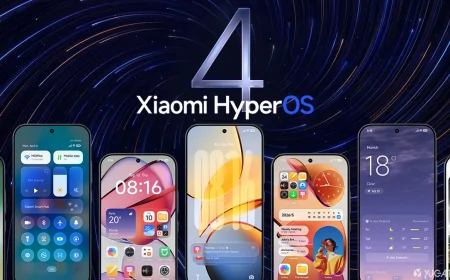
The most noticeable change is the new Soft Light Glass interface, which adds frosted, translucent depth across control panels and menus. Users also get stacked notifications, resizable home screen folders, stacked widgets, and oversized lock-screen clock styles. If you prefer the older look, Xiaomi includes a toggle in Settings to switch back to the classic layout.
2. Faster App Launches and Camera Processing
Under the hood, a background AI resource scheduler studies daily usage habits to speed up app loading. In Xiaomi's internal benchmarks, launching 30 consecutive apps after nine hours of active use dropped from 40.3 seconds on HyperOS 3 to 36.8 seconds on HyperOS 4—an 8.7% speed improvement—while HDR photo processing time fell by 23.4%, from 313.38 ms down to 240.16 ms.
3. Super XiaoAi 2.0 and iPhone File Sync
HyperOS 4 upgrades Xiaomi's smart assistant to Super XiaoAi 2.0, built on the company's MiMo large language model, alongside improved AI Speech Recognition and AI Voice Notes that help students transcribe lectures and organize schedules. Its Super Island notification bar now supports over 130 services, and improved iOS compatibility allows seamless sharing of photos, files, contacts, and web pages with iPhone users—though certain MiMo AI features remain limited to Chinese ROM builds.
How to Check and Prepare Your Phone for the Update
Because HyperOS 4 is a heavyweight firmware package—weighing over 8 GB to 8.9 GB on models like the Poco F8 Pro—taking a few precautions before downloading will prevent installation errors:
- Check Manually in Settings: Open Settings, tap About Phone, and select System Update to see if the OTA package has arrived for your device.
- Free Up Internal Storage: Clear at least 10 GB of free storage space so the downloaded package can unpack and install smoothly.
- Charge and Back Up: Keep your battery level above 50%, use a stable Wi-Fi connection rather than mobile data, and back up essential photos and study files before rebooting.
Final Thoughts for Xiaomi, Redmi, and Poco Users
With 82 phones and tablets lined up between early November and December 2026, Xiaomi's rollout brings meaningful visual and speed upgrades to both current flagships and older workhorses like the Xiaomi 13T and Redmi Note 14 series. Keep in mind that Xiaomi distributes updates in staggered waves to monitor stability, so if your phone is in the Early or Mid-November batch and hasn't received the prompt yet, wait a few days and check your System Update menu again rather than installing unofficial ROM files.